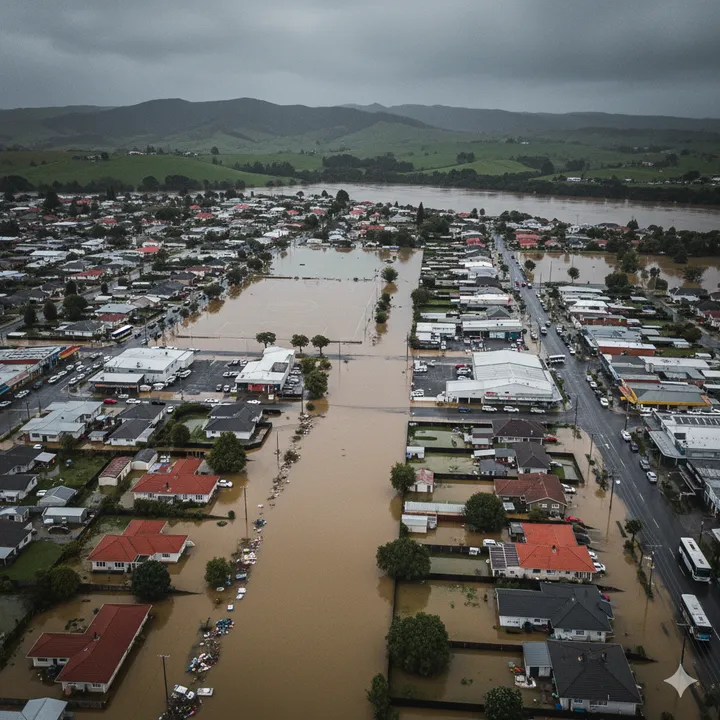
How Flood Risk Ratings Affect NZ Property Values (2025 Guide)
With New Zealand’s standardized flood risk ratings being implemented across all LIM reports, property owners and buyers need to understand how these ratings may affect property values, insurance, and long-term investment potential.
National Context: Recent government estimates indicate that 219,000 homes nationwide are in flood-prone areas (both inland and coastal), with a total market value of approximately $180 billion at documented risk. This represents a significant portion of New Zealand’s property market that will be affected by increased flood risk transparency.
The October 17, 2025 regulations are now in effect. All LIM reports requested on or after this date include standardized flood risk information.
Sources: MBIE Building Performance, local council flood management documentation, RNZ national property risk analysis
The Property Value Impact: What Research Shows
Research from New Zealand and international markets indicates that flood risk disclosure can affect property values, though specific impacts vary significantly by location, property type, and market conditions:
Short-Term Impact After Risk Disclosure
- High Risk Properties: Studies show typical reductions of 4-10% in sale price for high flood-risk homes in New Zealand and Australia, with some cases up to 15% depending on housing market tightness and mitigation availability
- Medium Risk Properties: Variable impact ranging from 2-6% value adjustments depending on local market conditions and buyer risk tolerance
- Low Risk Properties: Often see minimal impact (0-2%) or may benefit from confirmed low-risk status in risk-averse markets
Market Behavior Changes
- Time-to-sell: High-risk properties typically take 20-60% longer to sell compared to regional averages
- Buyer pool reduction: Real estate agents report buyer interest drops by 30-50% in flagged flood risk zones
- Market adjustments: Depend heavily on regional factors, housing supply constraints, and available mitigation options
New Zealand Market Context
The property market is still adapting to standardized flood risk disclosure. While specific impact data for the new rating system is not yet available, international experience suggests that transparency around natural hazards typically leads to more informed pricing decisions.
Sources: New Zealand property market analysis, international flood risk research studies
Understanding the Three Risk Categories
AEP (Annual Exceedance Probability) Definitions:
- 1% AEP: “1 in 100 year” flood event
- 2% AEP: “1 in 50 year” flood event
- 10% AEP: “1 in 10 year” flood event
Auckland Council Data (2025) provides insight into how properties are distributed across risk categories:
- Low Risk: About 70% of affected properties fall into “low risk” zones—where flooding is possible only in extreme (1% AEP or lower) events
- Medium Risk: Approximately 25% of flagged properties have a moderate risk (AEP between 1-10%), typically meaning some chance of overland flow or ponding in a typical year
- High Risk: Only 5-8% of Auckland’s mapped properties are designated “high risk” (e.g., 10%+ AEP)—these locations are susceptible to regular annual flooding
Category 1: Low Risk
Market Impact: Generally minimal (0-2% value impact)
- Often viewed positively as confirming low flood exposure
- May increase buyer confidence compared to unknown risk
- Insurance typically remains readily available at standard rates
- Market impact: Generally neutral to positive
Category 2: Medium Risk
Market Impact: Variable (2-6% value impact)
- Some buyers may be cautious while others accept manageable risk
- Insurance available but may involve higher premiums or excess levels
- Lenders may request additional information or assessments
- Market impact: Depends on local factors and buyer preferences
Category 3: High Risk
Market Impact: Potentially significant (4-15% value impact)
- Buyer pool likely to narrow considerably
- Insurance may become more expensive or difficult to obtain
- Some lenders may apply stricter lending criteria
- Market impact: Could be substantial, varying by location and mitigation options
Insurance Implications
Flood risk ratings directly affect insurance availability and cost:
Current Market (Pre-Standardized Ratings)
- Many homeowners may be unaware of their actual flood risk
- Insurance companies using their own risk assessment models
- Premium structures not yet standardized across the industry
- Market still transitioning to consistent flood risk information
Sources: Insurance Council of New Zealand, major insurance providers’ risk assessment documentation
Current Insurance Market (Post-October 2025)
High Risk Properties (Category 3)
- Since late 2023, insurance premiums for properties flagged as high flood risk have risen by $500-$5,000 per year
- Excesses commonly double or triple compared to those for non-risk properties
- Some insurers may apply higher excesses or reduce flood coverage
- Options may become more limited in the insurance market
Medium Risk Properties (Category 2)
- Moderate premium increases expected, typically $300-$1,500 annually depending on specific risk factors
- May face higher excess levels or specific policy exclusions
- Insurance generally available but at increased cost
- Shopping around between insurers becomes more important
Low Risk Properties (Category 1)
- Minimal premium changes expected (typically $0-$200 increase)
- May benefit from relative market positioning as verified low-risk
- Insurance likely to remain competitive
Note: Specific premium increases will vary by insurer, location, and individual property circumstances. Consult with insurance professionals for accurate quotes based on your property’s specific risk profile.
Bank Lending and Mortgages
Financial institutions are adapting to increased flood risk transparency:
Lenders are developing risk assessment frameworks that incorporate standardized flood risk information. This is part of broader responsible lending practices that consider all known property risks.
Mortgage Approval Impacts
High Risk Properties
- Lenders may apply additional risk assessment procedures
- Could face more stringent lending requirements
- Insurance coverage will likely be a key consideration
- May require additional property or risk assessments
Medium Risk Properties
- Generally able to access standard lending products
- Lenders may request additional information about flood risk
- Insurance availability and cost will be important factors
Refinancing Considerations
If your property receives a high flood risk rating:
- Existing mortgages typically remain in place as agreed
- Future refinancing may require additional documentation
- Lenders will consider flood risk as part of overall property assessment
- Planning ahead for refinancing applications becomes more important
Note: Specific lending policies vary between financial institutions. Consult with your bank or mortgage broker for guidance on how flood risk ratings may affect your specific situation.
What You Can Do to Protect Your Property Value
Now That Regulations Are In Effect
For Sellers:
- Get Your LIM: Request a LIM report to know your official rating
- Document Mitigation: If you’ve made flood improvements, ensure they’re documented and highlighted
- Price Realistically: Acknowledge flood risk in pricing to avoid extended time on market
- Target Right Buyers: Market to investors or buyers seeking fixer-uppers if high risk
For Buyers:
- Request LIM Reports: Obtain official flood risk ratings before making offers
- Budget for Mitigation: Factor in potential flood protection costs
- Negotiate Appropriately: Use flood risk ratings as negotiation leverage where justified
Property Protection Strategies
Mitigation Strategies:
- Physical Improvements
- Raising floor levels or elevating living spaces
- Installing flood barriers, gates, or protective systems
- Improving property drainage and water management systems
- Landscaping modifications to direct water flow away from buildings
Mitigation Cost Ranges:
- Basic flood barriers and drainage improvements: $10,000-$30,000
- Floor level raising or elevation: $25,000-$70,000
- Comprehensive flood protection systems: $50,000-$100,000+
- Complex projects (full-scale elevation, major drainage): Can exceed $100,000 depending on size and location
Note: Costs vary significantly based on property size, location, type of improvements, and local contractors. Obtain multiple quotes and consider whether improvements are cost-effective for your specific situation.
-
Documentation
- Commission independent flood risk assessment
- Document all mitigation measures
- Get updated flood modeling from council
- Keep records for future buyers
-
Insurance Optimization
- Shop around with multiple insurers
- Consider flood-specific policies
- Increase excess to reduce premiums if affordable
- Bundle policies for better rates
-
Community Action
- Work with neighbors on shared flood defenses
- Petition council for infrastructure improvements
- Join or form residents associations
Challenging Your Flood Risk Rating
If you believe your property’s rating is incorrect:
Grounds for Challenge
- Topographical surveys showing property is higher than modeled
- Recent flood protection work not included in assessment
- Council modeling based on outdated data
- Property modifications that reduce risk
Challenge Process
While specific processes may vary between councils, the general approach includes:
- Request Your Property’s Assessment Data: Obtain the detailed flood modeling information for your specific property
- Gather Supporting Evidence: This may include professional surveys, historical records, or documentation of property improvements
- Professional Assessment: Consider engaging qualified professionals such as surveyors or engineers
- Formal Submission: Follow your council’s official process for rating challenges
- Review Period: Councils will assess submissions and provide decisions
Considerations Before Challenging
Before pursuing a challenge, consider:
- Professional assessment costs (surveys, engineering reports, etc.)
- Time involved in the challenge process
- Likelihood of success based on available evidence
- Whether mitigation efforts might be more cost-effective
Note: Challenge processes, timelines, and requirements vary between councils. Contact your local council directly for specific information about their flood rating challenge procedures.
Regional Market Variations
Council’s Regional Hazard Variation data shows significant differences in how flood risk is modeled and reported across regions:
Auckland
- Properties affected: ~36,000 homes flagged above moderate threshold
- Focus areas: North Shore stream catchments, West Auckland properties near Waitakere ranges, eastern suburbs with coastal flood risk
- Modeling approach: LiDAR and hydraulic modeling for overland flow and floor risk
- Market depth: More buyers accept some risk due to housing shortage
Wellington
- Properties affected: ~18,000 homes flagged above moderate threshold
- Focus areas: River corridors (Hutt Valley, Porirua), sea level rise affecting coastal areas
- Modeling approach: River and coastal surge analysis
- Market concern: Earthquake + flood risk = compounded impact
Christchurch
- Focus areas: Post-earthquake land subsidence areas, Avon and Heathcote river corridors
- Modeling approach: Post-earthquake adjusted modeling
- Market adjustment: Already significant hazard awareness due to 2011 earthquakes
Other Regions
- Smaller markets may see more pronounced impacts due to limited property alternatives
- Less buyer competition for high-risk properties
- Limited options for buyers avoiding flood risk
- Regional variations in modeling sophistication and risk communication
Long-Term Investment Perspective
Properties to Avoid
- High risk with no practical mitigation options
- Ground floor apartments in flood zones
- Properties with history of repeated flooding
- Areas with poor council flood infrastructure plans
Properties That May Weather the Changes
- Medium risk with clear mitigation pathways
- Properties where flood risk is offset by other desirable features
- Areas with active council flood protection projects
- Properties at higher elevations within broader flood zones
Climate Change Considerations
Current flood modeling approaches incorporate:
- Historical rainfall patterns and flood events
- Climate change projections where available
- Regional variations in climate impacts
Long-term Outlook: Flood risk patterns are expected to evolve:
- Climate models project more intense rainfall events for many regions
- Sea level rise continues to affect coastal and river systems
- Risk categories may change over time as conditions evolve
Sources: NIWA climate research, Ministry for the Environment climate guidance, regional council climate adaptation plans
Market Strategies Now That Regulations Are In Effect
For Sellers
Sell Now If:
- You need to relocate regardless of market conditions
- You can price competitively to account for flood risk
- You’ve completed mitigation works that reduce risk
Consider Holding If:
- You can complete significant mitigation works first
- Your council has planned flood protection infrastructure upgrades
- The market is currently weak and expected to improve
For Buyers
Good Time To Buy If:
- You’re comfortable with the disclosed flood risk
- Property is priced appropriately for the risk level
- You have budget for mitigation if needed
- You’re taking a long-term view (10+ years)
Wait Or Avoid If:
- High risk property with no practical mitigation options
- Property not priced appropriately for flood risk
- You plan to resell within a few years
- Area has poor council flood protection plans
The Bottom Line
Flood risk ratings will create a more transparent but potentially volatile property market:
Negative Impacts:
- Short-term value decreases for high-risk properties
- Increased insurance costs
- Reduced buyer pool for affected properties
Positive Impacts:
- Better-informed decisions for all parties
- Investment in flood mitigation and infrastructure
- More accurate property pricing
- Climate change risk properly reflected in values
Key Takeaway: Properties with disclosed flood risk will find their natural market price. While this may be lower than pre-disclosure values for high-risk properties, it creates a more sustainable and honest property market.
Action Checklist
- Request a LIM report for your property to see official flood risk rating
- Review your current insurance coverage and excess
- Get quotes from multiple insurers for flood cover
- Assess property for practical mitigation options
- Budget for potential insurance premium increases
- Consider professional flood risk assessment if concerned
- Factor flood risk into any buying/selling decisions
- Monitor council flood protection infrastructure plans for your area
Frequently Asked Questions (FAQ)
How much does flood risk reduce property value?
High flood risk properties typically experience a 4-10% value reduction when risk is disclosed on LIM reports. Medium risk properties may see 2-6% decreases. The actual impact depends on the severity of risk, location, and local market conditions.
Will insurance still be available for flood-prone properties?
Yes, most insurers continue to provide coverage for flood-prone properties. However, premiums have increased by $500-$5,000 annually for high-risk properties since late 2023, and excess levels are often doubled or tripled.
Should I sell my high-risk property now that regulations are in effect?
Now that official ratings are public, the market has adjusted to reflect flood risk. High-risk properties face a smaller buyer pool and longer selling times, but pricing transparently and documenting any mitigation efforts can help maintain value.
How much does flood mitigation cost?
Basic improvements like drainage and barriers cost $10,000-$30,000. Floor level raising costs $25,000-$70,000. Comprehensive systems run $50,000-$100,000+. The cost-effectiveness depends on your property value and risk level.
How long does it take to sell a flood-prone property?
Research shows high flood risk properties take 20-60% longer to sell compared to regional averages. The buyer pool typically shrinks by 30-50% when flood risk is disclosed.
Can I get a mortgage on a flood-prone property?
Yes, but lenders may require additional insurance coverage and may apply more conservative lending criteria. Some banks are starting to factor climate risk into lending decisions.
What mitigation works best for property values?
Physical improvements that demonstrably reduce risk are most effective: raised floor levels, proper drainage systems, and flood barriers. Documented professional assessments showing reduced risk can also help maintain value.
Will my council improve flood protection in my area?
This varies by council and area. Check your council’s long-term infrastructure plans and adaptation strategies. Some areas are prioritized for flood protection investment, while others may not receive upgrades for years or decades.
This article provides general information only and is not a substitute for professional advice. Property values are affected by many factors beyond flood risk. Consult with qualified real estate professionals, engineers, insurance brokers, and financial advisors for guidance specific to your property and circumstances.
Key Official Sources:
- MBIE Building Performance: Flood risk disclosure requirements
- Your local council: Flood mapping and LIM report information
- Insurance Council of New Zealand: Insurance guidance for at-risk properties
- NIWA: Climate change and flood risk research
- Regional councils: Local flood management and adaptation planning
Statistical Sources:
- RNZ national property risk analysis: 219,000 homes, $180B market value
- Auckland Council property categorization data (2025): Risk category distributions
- Insurance industry data: Premium increases ($500-$5,000 annually for high risk)
- Real estate market analysis: Time-to-sell increases (20-60%), buyer pool reduction (30-50%)
- International flood risk research: Value impact ranges (4-10% for high risk, 2-6% for medium risk)
- Mitigation cost surveys: $10,000-$100,000+ for flood protection measures
- Regional council hazard modeling: Property counts and regional variations